
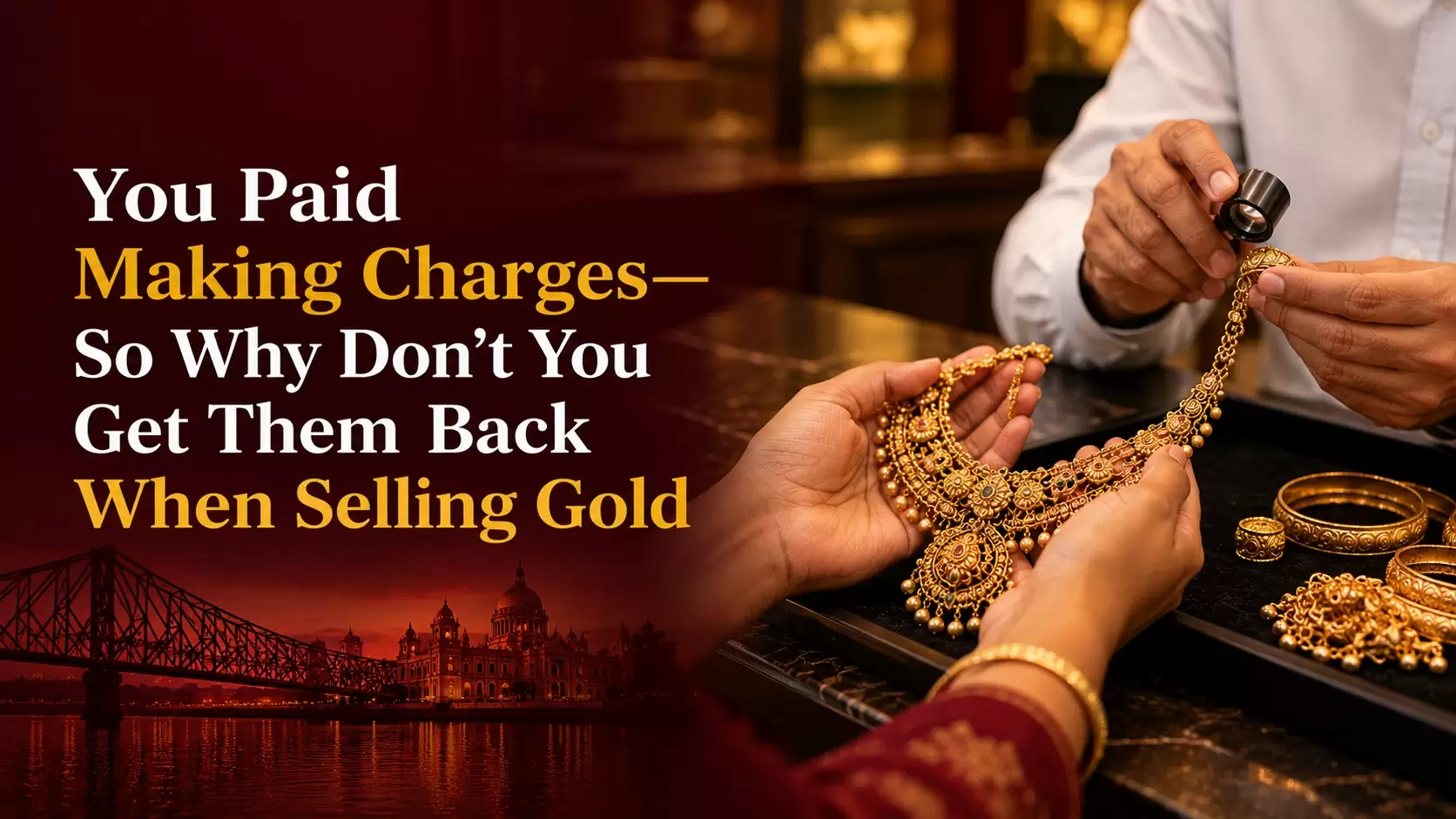
You bought a lovely necklace, and the bill shows the gold’s worth, the making fees, and the tax amount. You paid the bill without thinking too much. But a few years later, when you decide to sell it, you receive only the gold value. The making charge isn’t included; hence, you feel like you’ve lost money. How is this possible?
The answer is straightforward, but it’s good to know before you visit a gold jewellery buyer in Kolkata.
What Making Charges Pay For Gold Jewellery
Making charge refers to the cost of processing raw gold into finished jewellery. This charge includes labour, machine use, and finishing. It also includes the cost of designing the item and other overhead costs.
On the bill, the making charge may be shown in various ways. Some jewellers charge a fixed fee, while others charge a percentage of the gold value. Some jewellers even call the making charge wastage or value addition. It simply has the same meaning.
The expense increases with the design’s complexity. A simple chain can be made cheaply. An artisan-made wedding set can be very pricey. Machine-made jewellery often costs less to manufacture than handmade jewellery.
Moreover, you pay GST on the price. That is also not refundable.
The key point is that manufacturing charges already cover the work performed. When you buy jewellery, you pay for the service provided.
Why Buyers Do Not Pay Them Back
Selling used jewellery does not involve the buyer purchasing a design. Instead, the buyer purchases gold.
The process is simple. Most buyers take the jewellery, melt it down and refine it. This destroys its shape. Melting destroys the original design. What is left is the metal whose value is determined by its weight and purity.
The design process can be done only once. Therefore, the gold jewellery buyer in Kolkata gets no additional value once the jewellery is melted.
Buyers also incur costs. They incur costs associated with testing, refining, and handling the gold. These costs are part of the gold’s price.
When you buy a cake, you buy not only the ingredients but also the baker’s talent. When you later sell the cake, you will find that the price is determined not by the baker’s skill but by the cake itself.
The same is true for jewellery. A new piece has retail value, while old gold has intrinsic value. The two values are distinct.
Some old pieces can be sold as antiques rather than scrap metal, and can sometimes be sold for more.
How Much Do Making Charges Add?
Every shop has a different amount. The amount also varies by design. Simple pieces can have lower making charges. Complicated or handcrafted designs, however, cost more.
Let’s say you bought a 20-gram gold necklace. The making charge is 15% of the gold price. This means 15% of your spending went to making charges.
In essence, you start the resale approximately that much behind before taxes are deducted.
Selling gold means the 15 percent is lost. For gold, you will be paid based on its purity and the selling rate.
That is why a seller’s price is lower than the buying price. The difference can be due to many reasons, such as making charges and taxes. Minor deductions also apply, and the difference may reflect fluctuations in the gold rate.
How to Protect Your Value
You cannot retrieve the making charges. However, you can still save money. Here’s how:
- Opt for simple designs. This means you will pay lower making charges and lose little on resale.
- Buy hallmarked gold. That way, you can easily verify purity.
- Save bills. They prove purity and weight.
- Consider coins and bars. If you invest in them, you will incur lower charges.
- Compare different making charges. Get information from two or three jewellers to compare.
- Sell at the right moment. Gold prices vary, and higher prices can offset the loss.
Ask your jeweller about any buyback policy when you buy. Read the terms closely. These policies usually value only the metal.
Remember that the gold you wear is both an ornament and an asset. Enjoy it. But remember that the ornament part has no resale value.
Choosing the Right Buyer
An honest buyer does three things. They perform a gold test in front of the seller. They are clear about the weight, purity, and price. They do not charge anything extra.
Cash On Old Gold values your gold openly for free. It tests your precious metal using XRF technology while you observe. No melting happens without your agreement. It does not force you to buy new gold. If the client feels the offer is insufficient, he/she can go and compare somewhere else.
The company buys gold ornaments, bars, coins, and scrap. It also buys broken gold and diamond jewellery items which are at least 15 years old. There is no quantity limit. Payments are made immediately in cash or through NEFT/RTGS methods.
Final Thoughts
Making charges refer to the cost of making, not the value of the gold. They cover the work completed. The buyer pays for the metal when the seller sells.
Understanding this prevents disappointment. It also helps you buy intelligently next time. When you sell, contact a gold jewellery buyer who is transparent about every aspect of the process. Visit us for an accurate evaluation and quick payment.

0 Comments