
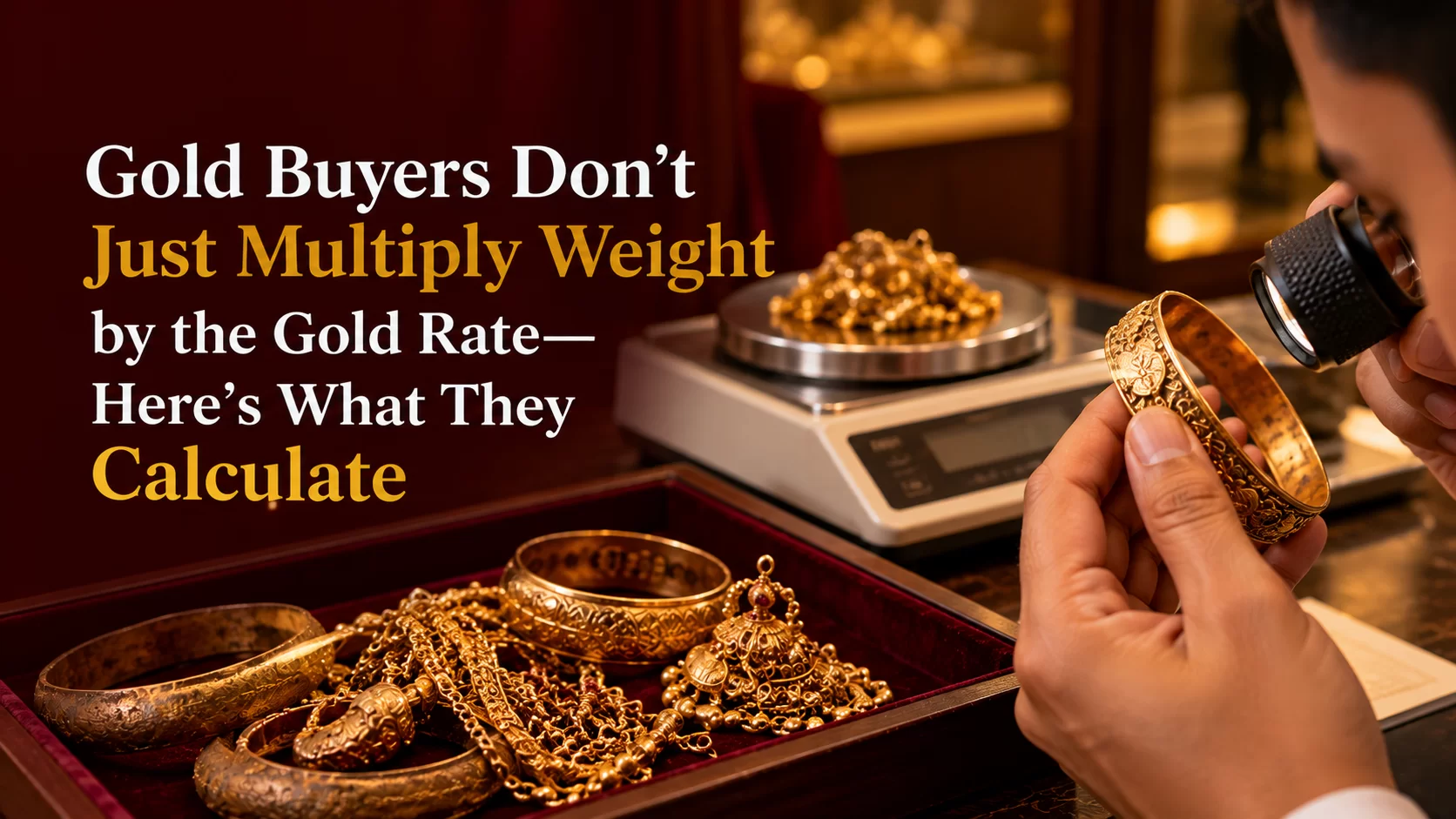
You check the gold price on your phone. You weigh the gold chains at home. You multiply the weight by the gold rate and get a number that differs from what the gold buyer gives you. At first, it may seem unfair, but this gap isn’t random. The price of your gold jewellery isn’t based on weight alone. There are more steps involved.
Knowing these steps helps you interpret offers, check whether a rate is reasonable, and decide whether to exchange gold for cash.
Gross Weight Is Not the Gold Weight
A simple point: the weight shown on a scale is the gross weight. This weight includes everything in the item. This means it is the total weight of the gold plus anything that is not gold.
Examples include clasps, enamel work, lac filling, beads, pearls, and stones. A hollow bangle may have lac inside it. A necklace may have small stones. Everything mentioned above adds up to the total weight.
When a buyer buys a piece, he will subtract all those parts from the weight. What’s left is the net weight of the metal, and that is the only weight at that point.
Let’s consider a simple case. Imagine your necklace weighs 10 grams on the scale. The stones and lace weigh 0.5 grams. So the net weight is 10 – 0.5 = 9.5 grams, and this figure will give you the answer in your next step.
Many sellers don’t pay attention to this fact. They calculate based on the full 10 grams and later get confused.
Purity Decides How Much Is Actual Gold
Then we have purity. Most old jewellery pieces aren’t made from 24K gold. Pure gold is very soft for everyday use. So jewellers use copper, silver, or other metals to harden it. There are several types of gold, such as:
- 24K – around 99.9% gold
- 22K – about 91.6% gold
- 18K – about 75% gold
Let’s use our example: a necklace that weighs 9.5g and is made of 22K gold. This leads us to conclude that the pure gold content in this necklace is 9.5 multiplied by 0.916, which is approximately 8.7 grams.
As you can see, the original weight of 10g closely matches the amount of pure gold inside the item, which is 8.7g. These results are used to determine the gold price.
Gold purity is determined through testing. Currently, XRF machines are common because they provide quick, accurate results without harming the item. A hallmark must also be present, but buyers should verify the test results.
Old jewellery can be tested differently than indicated in the marking due to the influence of wear and tear.
The Rate Buyers Actually Use
When you browse the internet, the rate you see is normally the 24K rate. This is an indicative or retail price, which includes taxes or premiums you would not pay when selling.
On the other hand, a buyer calculates the buying rate. This is the rate at which he buys gold from the public. It is determined by the market and is slightly lower than the retail price.
Let us assume the 24K rate is ₹10,000 per gram for calculation purposes. In this case, 8.7 grams of pure gold costs approximately ₹87,000.
Keep in mind that prices change throughout the day, so ask the buyer for the rate at the time of sale.
That figure will be the initial one you need for calculations.
Deductions That May Apply
After the base price, other charges may apply based on the particular item and the buyer.
- Losses from melting and refining. Gold is usually melted and refined after it has been purchased, and a small amount of metal is lost.
- Losses due to wear and tear. Old, worn-out pieces and items with solder joints may test lower than expected.
- Special types of items. Items containing cadmium solder, known as KDM, should be evaluated carefully because their gold content is lower.
A fair buyer will explain all these things before the deal is finalised by you.
You also may want to remember that making charges are not added back.
What to Ask Before You Accept an Offer
Use these questions to verify any quotation:
- What is the final weight of gold after eliminating stones and other items?
- What quality of gold is tested?
- What purchasing price are you considering today?
- Are there any reductions for melting and refining?
- Will the test be conducted visibly?
If a purchaser answers all five questions precisely, that’s a positive indicator. If responses are unclear, it is better to think twice.
Where Fair Valuation Happens
At Cash On Old Gold, we follow similar valuation procedures. Our staff will weigh and test your valuables in front of you using our advanced XRF scanning process. Our team will share with you the net weight, purity of your valuables and valuation.
You have the right to obtain a second opinion. Valuation is free of charge. You can exchange gold for cash only if you are fully satisfied.
Bottomline
The gold rate is just one aspect of the story. The final amount you receive consists of factors such as the weight, purity, rate at which you buy, and minor charges involved. Knowing the above will help you understand how far you were from the actual offer.
Don’t forget to note the weight and purity of your gold, and do your homework before selling. Visit us for a transparent valuation, and get instant payment via cash, NEFT, or RTGS.

0 Comments